





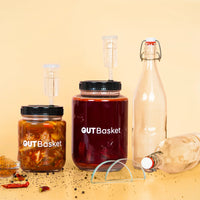




This haldi carrot no-oil achar is sharp, earthy, and alive. Made using natural lactic fermentation, it relies on salt, time, and spice, not oil or vinegar, to develop flavour. The result is a bright, probiotic-rich pickle with warmth from fresh turmeric and depth from rai kuriya. It pairs beautifully with simple dal–chawal, khichdi, or plain curd rice.
Ingredients (for a 1L Fermentation Jar)
300 g fresh haldi (turmeric), cut into sticks
300 g red carrots, cut into sticks
30 g rai kuriya (coarsely crushed mustard seeds)
13 g sea salt
Water (if needed)
1 whole cabbage leaf
Equipment
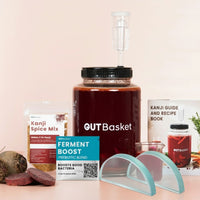
1L glass fermentation jar
Grommet lid
Airlock
Glass weights
Everything you need to ferment safely at home: glass fermentation jar, grommet lid, airlock, glass weights, and a recipe book.
View the KitInstructions
Prepare the Vegetables
Wash the haldi and carrots thoroughly. Chop both into even sticks, roughly 2 inches long. Try to keep the sizes consistent for even fermentation.
Salt the Vegetables
Transfer the cut vegetables to a large bowl. Sprinkle the salt evenly over them.
Toss & Rest (Draw Out Brine)
Toss the vegetables well so the salt coats everything. Leave the bowl loosely covered for 1 hour. You’ll notice moisture collecting at the bottom of the bowl. This natural brine is essential for fermentation.
Add Spices
After resting, add the rai kuriya. Mix thoroughly so the spices coat the vegetables evenly.
Pack into the Jar
Pack the vegetable mixture into the fermentation jar in layers, pressing firmly with your hand or a spoon to remove air pockets. As you press, more brine should rise.
Add the Cabbage Leaf
Place a whole cabbage leaf over the vegetables, with the curled edge facing down. This helps keep smaller pieces from floating and creates a natural barrier.
Add Glass Weights
Place the glass weights on top of the cabbage leaf and press gently. The vegetables must remain fully submerged under brine. If the brine does not fully cover the vegetables, top up with extra brine. To prepare extra brine, dissolve 2 g salt in 100 ml water.
Seal with Grommet Lid & Airlock
Close the jar with the grommet lid and attach the airlock. Fill the airlock halfway with water.
Ferment
Keep the jar in a warm, shaded spot for 5–7 days.
Check for Readiness
You’ll notice bubbling, cloudiness, and a pleasant, sharp aroma, signs of active fermentation. Start tasting after Day 5. The achar should be tangy, slightly spicy, and aromatic.
Store
Once fermented to your liking, remove the cabbage leaf and glass weights. Replace the lid with a regular storage lid and refrigerate.
Tips & Notes
No oil needed: This achar preserves beautifully through fermentation alone.
Cabbage leaf trick: A simple and effective way to keep vegetables submerged and mould-free.
Flavour development: The sharpness mellows over time, especially after refrigeration.
Shelf life: Keeps well in the refrigerator for up to 2–3 months.
Final Thoughts
This haldi carrot no-oil achar is bold, functional, and deeply rooted in traditional preservation. It’s proof that oil isn’t essential for a great pickle; patience and balance are. Serve it sparingly, let it shine, and let the microbes do their work.


