





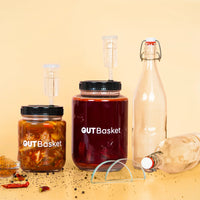





Kanji fermentation works when you stop thinking of it as a recipe and start thinking of it as an environment. A successful jar is not about adding more ingredients or doing anything complicated. It is about creating the right conditions so beneficial bacteria can grow while harmful microbes fall away.
When that environment is built correctly, simple vegetables turn into a tangy, probiotic-rich drink that supports gut health; when it isn’t, fermentation struggles.
Kanji gets this balance right through four essentials. Each one plays a specific role in keeping the ferment safe, active, and stable.
Fermentation Starts on the Surface, Not Inside the Vegetable
One of the most common mistakes people make while preparing vegetables for kanji is peeling them. The outer skin of vegetables like beetroot carries a natural population of beneficial microbes. These microbes are what begin the fermentation process. When the skin is removed, a large part of this microbial starter is removed with it.
The correct approach is simple:
- Scrub vegetables thoroughly under clean water
- Remove dirt and damaged spots
- Keep the skin intact
Cleaning removes contamination. Peeling removes fermentation potential. Kanji depends on what lives naturally on the surface.
The Four Essentials That Create a Safe Fermentation Environment
Kanji fermentation works because it builds a controlled home for beneficial bacteria. That home depends on four essentials working together.
Each one answers a different need of fermentation.
1. The Starter: Natural Microbes on the Skin
Fermentation needs microbes to begin. In kanji, these microbes are already present on the vegetable surface.
Keeping the skin ensures:
- Fermentation starts naturally
- No external cultures are required
- Microbial diversity remains intact
This is why kanji does not rely on starters or additives. The process begins with what is already there.
2. The Bodyguard: Salt Shapes the Microbial Balance
Salt does not exist in kanji just for taste. Its role is protective.
Salt creates selective pressure inside the jar:
- Many spoilage and rotting bacteria struggle in salty environments
- Lactic acid bacteria tolerate salt well and continue to grow
This difference allows beneficial bacteria to take control early in fermentation.
Salt helps by:
- Preventing uncontrolled microbial growth
- Stabilising the fermentation process
- Supporting consistent flavour development
Too little salt makes fermentation unpredictable. Proper salting gives beneficial bacteria a clear advantage.
3. The Spark: Crushed Mustard Seeds Activate Protection and Flavour
Mustard seeds are a defining part of kanji. When crushed and mixed with water, they release compounds that serve two purposes.
They:
- Suppress spoilage organisms
- Create kanji’s sharp, tangy heat
Crushing matters because it exposes the interior of the seed to water, allowing this reaction to happen. Whole seeds remain largely inactive.
This step supports both safety and flavour, which is why mustard seeds are central to traditional kanji.
4. The Seal: Water and a Lid Remove Oxygen
Oxygen changes fermentation completely. Many unwanted microbes, including mould, rely on oxygen to grow.
Kanji removes oxygen from the equation by:
- Fully submerging vegetables under water
- Sealing the jar to limit air exposure
Water acts as a physical barrier. The lid prevents fresh oxygen from entering. Together, they create an environment where fermentation can proceed safely.
If vegetables rise above the water line or the jar is loosely sealed, the risk of spoilage increases.
How These Four Essentials Work Together
Each element supports the others.
- The starter introduces beneficial microbes
- Salt protects them
- Mustard seeds strengthen the environment
- Water and a seal remove oxygen
When all four are present, fermentation becomes predictable rather than risky.This is why kanji has remained reliable across generations without modern equipment.
A Simple Checklist for Setting Up Kanji Correctly
Before leaving your jar to ferment, check these five points:
- Vegetables are scrubbed but not peeled
- Salt has been added in the correct amount
- Mustard seeds are crushed, not whole
- Vegetables are fully submerged under water
- The lid is sealed and stable
If these conditions are met, fermentation has the best chance to succeed.
Why This Matters for Gut Health
Kanji supports gut health because fermentation encourages beneficial bacteria while limiting harmful microbes.
During fermentation:
- Natural sugars are converted into organic acids
- The environment becomes hostile to pathogens
- Beneficial bacteria multiply and stabilise the drink
This is what turns kanji into a probiotic beverage rather than flavoured water.
Seeing the Process in Action
Understanding fermentation becomes easier when you see it happen. Watching how the jar is set up, how ingredients are added, and how the environment is sealed makes the logic clear.
If you want a visual walkthrough, watch how to make kanji here. Seeing the process reinforces why each step matters and how small details affect the outcome.
Making Kanji at Home with Consistency
Kanji does not need complex tools, but consistency matters. Using the right vessel, maintaining water coverage, and sealing correctly all support stable fermentation.
For those who want a structured starting point, the Kanji Making Kit is designed to support these exact conditions and reduce common mistakes.
View Kanji Making Kit
What Comes Next in Fermentation
Once the environment is safe, another question naturally follows. If bacteria live on the surface, how do they access nutrients locked inside a hard vegetable?
This question leads into osmosis, plant cell structure, and sugar release, the next stage of fermentation science. For now, the goal is simpler. Build the environment correctly. Let fermentation begin on solid ground.
Final Takeaway
Kanji fermentation succeeds when four essentials come together:
- Natural microbes from the vegetable skin
- Salt to protect beneficial bacteria
- Crushed mustard seeds for safety and flavour
- Water and a sealed lid to remove oxygen
These steps do not complicate the process. They simplify it. When the environment is right, fermentation does the rest.


