Kombucha Scoby And Stater Tea

Make authentic, gut-loving ferments at home.

★★★★★ 4.8 (87 reviews)
0 people bought this today
Benefits
🦠 30+ live strains
♾️ Reusable forever
24-hour ferment
🧪 Lab-grade selection
Select Pack
Live on arrival
Replacement guarantee
Expert WhatsApp support

1 tablespoon (~10g) of live, active milk kefir grains in a sealed pouch. With basic care these multiply forever — by week 4 you'll have enough to share with friends. One spoon ferments 1L of milk every 24 hours.

  • 30+ identified strains of beneficial bacteria + yeasts
  • Lab-tested — same culture used by traditional fermenters in the Caucasus for centuries
  • Wakes up in your first batch — full strength by batch 3
  1. Wake up — Add grains to 250ml whole milk, cover loosely with cloth. Sit 24h at room temperature.
  2. Strain — Pour through a plastic sieve (no metal). The kefir is the liquid; grains stay in the sieve.
  3. Repeat — Put grains in fresh 1L of milk, ferment another 24h. Drink the strained kefir.
  4. Build — By batch 3 the culture is at full strength. Grains will multiply over the first month.
  • Use whole, full-fat dairy milk — UHT works, fresh is better
  • Plastic, glass, or wood — never metal utensils or containers
  • Filtered water only when rinsing
  • Take a break — store grains in milk in fridge for up to 14 days between batches
  • Long pause — freeze in milk for up to 6 months
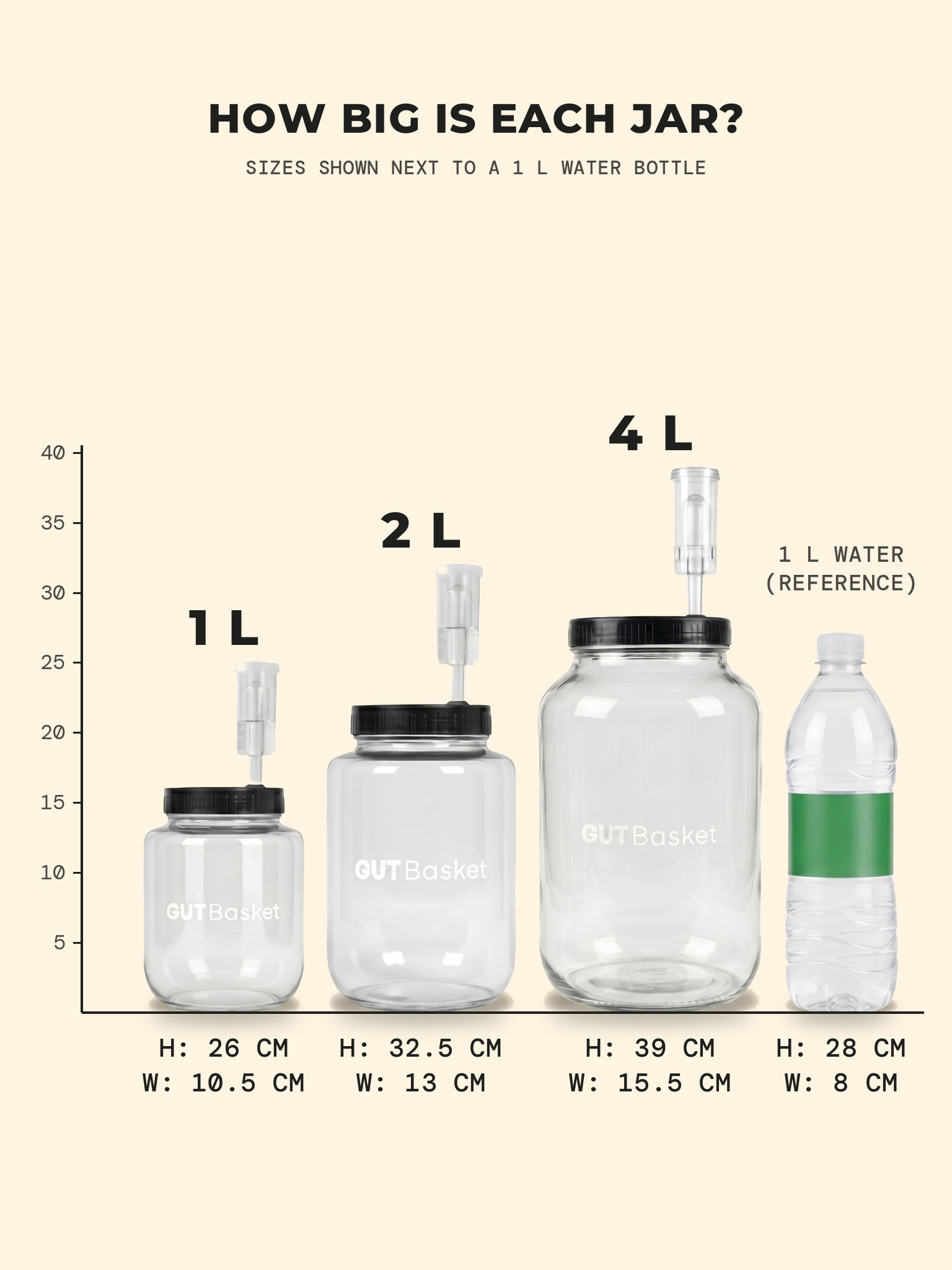
JAR SIZE COMPARISON

Kombucha Scoby And Stater Tea

Jar size comparison chart
HOW TO START

FROM POUCH TO FERMENT.

1
🥛
Wake the grains
Tip the pouch into 250ml whole milk in a glass jar. Cover with breathable cloth. Sit 24 hours at room temp.
2
Strain & store
Pour through a plastic sieve. The drinkable kefir is the liquid. Keep the grains for the next batch.
3
🔄
First real batch
Drop grains into 1L fresh whole milk. Ferment 18–24 hours. Strain, drink, repeat — the grains do the work.
First-batch tips
  • Use plastic, glass, or wood — never metal
  • Full-fat whole milk works best (UHT is fine)
  • Kitchen-counter warm (24–28°C) is ideal
  • First batch may taste mild — full strength by batch 3
  • Grains keep growing — share or freeze the surplus
WHY THIS CULTURE

LIVE, LAB-GRADE,RELIABLE.

🦠
STRAIN COUNT
30+ strains identified
Lactobacillus kefiri, L. acidophilus, L. lactis, kefir yeast strains and more — independently profiled by our lab.
🧪
LAB-GRADE
Cleared for human food use
Tested for absence of harmful contaminants every batch. No mold spores, no pathogenic E. coli, no salmonella.
♾️
REUSABLE
Multiplies forever
Treated right, your grains will outlive you. They double in mass every 2–4 weeks. Share, sell, or scale up your batches.
🎯
CONSISTENT
Same flavor, batch after batch
Standardized starter culture means your batch 30 tastes like your batch 3 — unlike wild ferments which drift.
VS HOMEMADE STARTERS

WHY OUR CULTURESTAYS ALIVE.

 
GutBasket Culture
Homemade Starter
Strain count
30+ identified strains
Variable, often 5–15
Lab-tested for safety
Yes, every batch
No verification
Consistency batch-to-batch
Standardized flavor
Drifts over time
Reusability
Forever (multiplies 2–4 weeks)
Forever, but unpredictable
Cost per litre of kefir
≈₹40 (milk only after one-time grain cost)
Free if gifted, but inconsistent
REAL FERMENTERS

FROM OUR CUSTOMERS.

Tried wild grains from a friend before — totally unreliable. These are bulletproof. Same kefir every single batch for the past 5 months.
Anjali Verma
32 · Bengaluru
I was nervous about handling a live culture. The care card and WhatsApp support made it dead simple. Three months in and the grains have tripled.
Vikram Iyer
45 · Chennai
Used to spend ₹400/week on store kefir. After buying these once, I'm at zero ongoing cost beyond milk. Already gifted grains to two friends.
Riya Patel
29 · Ahmedabad
QUESTIONS?

COMMON QUESTIONS

How long do the grains live?+

Indefinitely if cared for. Most home fermenters pass grains down for 5–10+ years.

Will the grains multiply?+

Yes — they double in mass every 2–4 weeks. By month 3 you'll have ~4× the starting amount. Share, freeze, or sell the surplus.

Can I use plant milk?+

Milk kefir grains specifically need lactose to thrive. Coconut milk works short-term (3–4 batches), then move grains back to dairy to refresh. For plant-based fermentation, our water-kefir grains are a better fit.

How much grain do I need per litre of milk?+

1 tablespoon (~10g) of grains per 500ml–1L of milk. As your grains multiply, you can scale up batch size.

Do you ship live grains via courier?+

Yes — packed in milk inside an insulated, leak-proof pouch. Reaches you in 2–4 days across India. If grains arrive looking dormant or off, our replacement guarantee covers a free re-ship.

ALL REVIEWS

87 VERIFIED REVIEWS