
Vegetable Fermentation Kit
Turn everyday vegetables into a tasty, crunchy, probiotic-rich addition to every Indian meal.


0 people bought this today
📦50,000+ Indian homes started fermenting with GutBasket
💬Expert help on WhatsApp
Benefits
 Naturally Probiotic
 Supports Daily Digestion
 3 Days, Made Indoors
 No Preservatives, No Sugar
✓ Secure Payment
✓ FSSAI Licensed
Description+
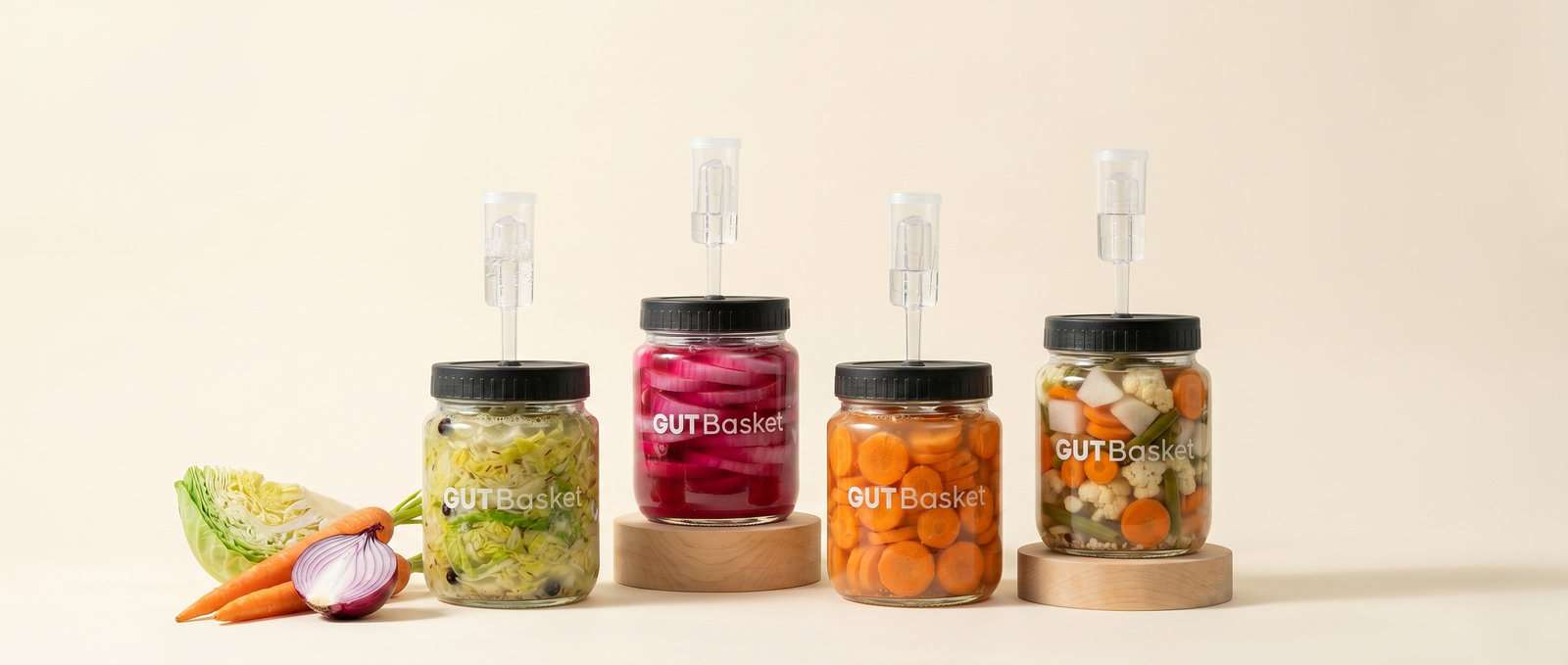
Make fermented onions, sauerkraut, carrots and mixed vegetables at home in 3 to 5 days. No vinegar. No preservatives. No daily burping. Just real lacto-fermentation in a kitchen-counter jar.
Pickle lovers · Daily probiotic seekers · Zero-waste kitchens
What's Inside+
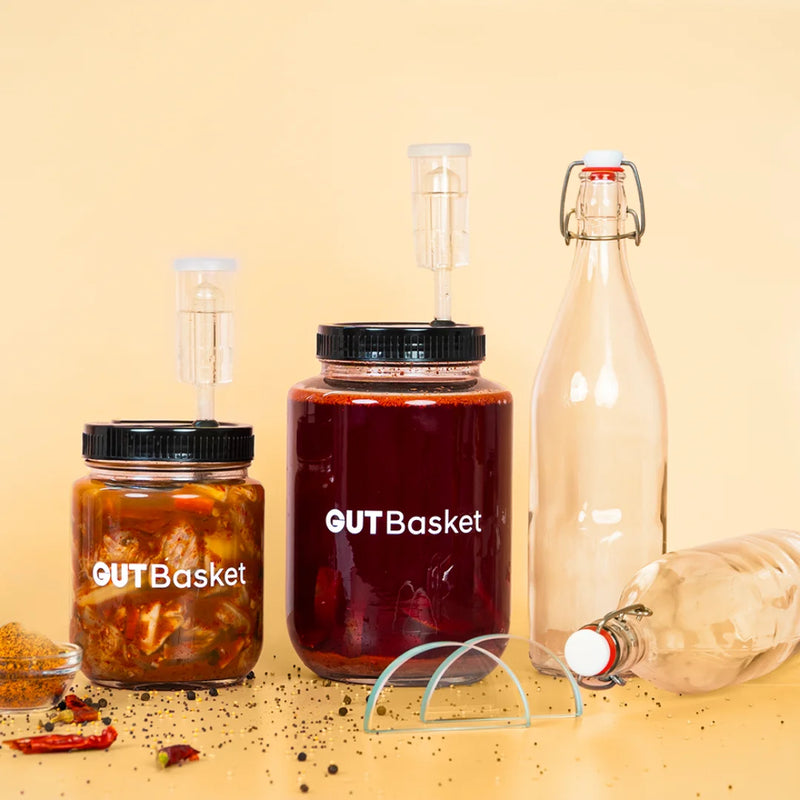
- Glass Fermentation Jar — Food-grade, reusable, weighted base. 1L or 2L.
- Airlock + Airlock Lid — Releases CO₂ during fermentation. Blocks oxygen — the cause of mould and kahm yeast.
- Storage Lid — Solid stainless lid. Swap once fermentation hits desired sourness — fridge-stable up to 3 months.
- Glass Weight — Keeps vegetables submerged below the brine — the line between fermented and mouldy.
- Sea Salt Sachet — Pre-weighed for a 2–2.5% brine. The standard for safe, crunchy vegetable ferments.
- Ferment Boost — Prebiotic blend that feeds the wild LAB on vegetable surfaces from Day 1.
- Recipe Booklet — 4 starter recipes: fermented onions, sauerkraut, fermented carrots, mixed vegetable ferment.
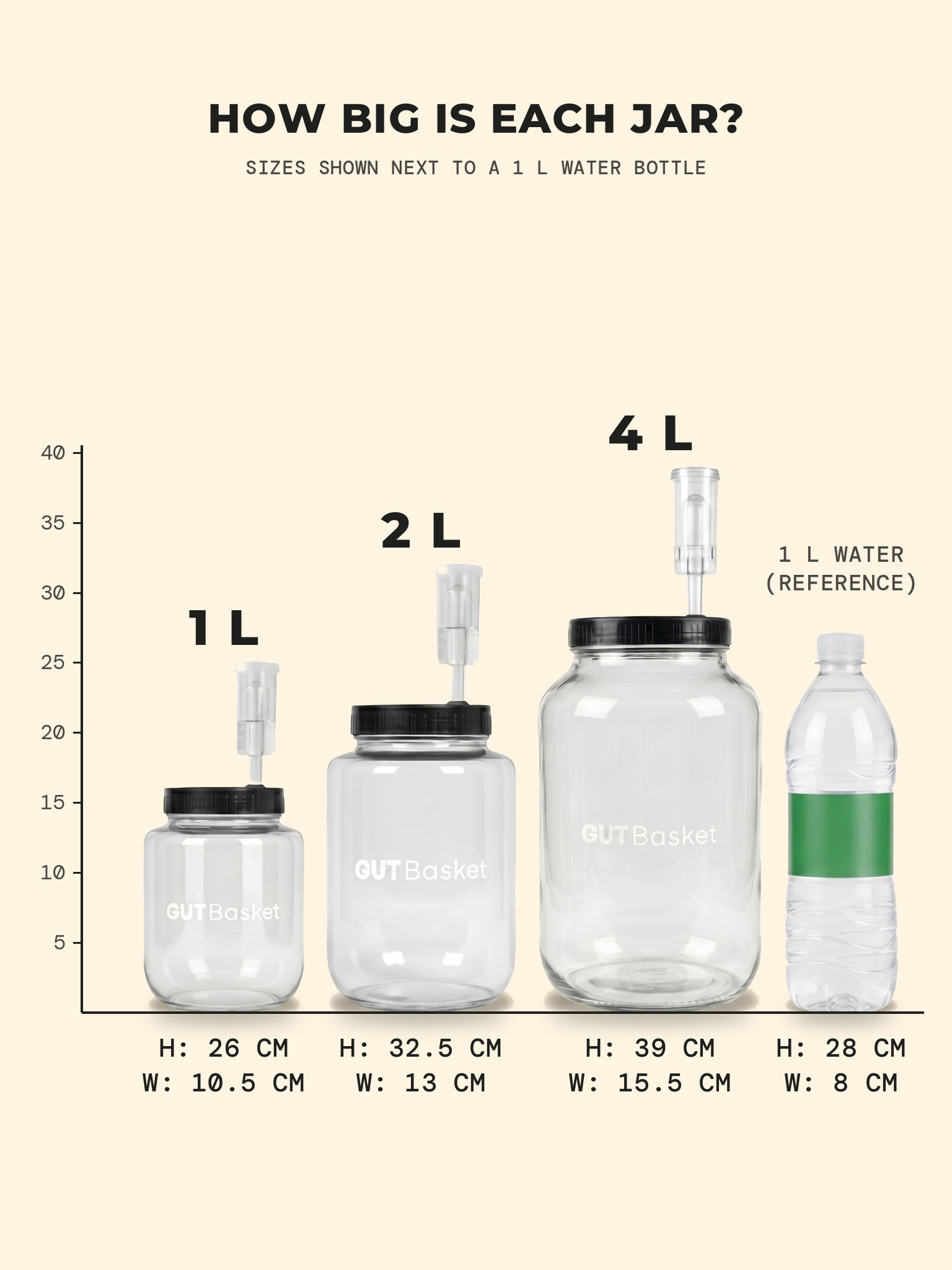
JAR SIZE COMPARISON
1L / 2L
50K+ Customers Served
Trusted by Indian homes since 2020.
Fermentation Expert Help
WhatsApp a photo if your batch looks confusing — we reply within 4 hours.
Damage Support Included
Glass arrives broken? Send a photo. We replace it, fast.
Made for Indian Kitchens
Use what you already buy — onion, carrot, cabbage, beetroot, mixed veg.
HOW TO MAKE
4 STEPS. ANY VEG. ALIVE.
1
Prep the vegetables
Wash and chop the vegetables. Add them to a clean fermentation jar.
2
Glass weights + brine
Place the glass weights on top. Dissolve salt in water to make the brine and pour it into the jar until the vegetables are fully submerged.
3
Close jar & airlock
Close the lid, attach the airlock, and fill it halfway with water.
4
Ferment & enjoy
Let it ferment for a few days until tangy and flavorful. Refrigerate and enjoy.
Not sure? Start with 1L for occasional ferments, 2L for regular household use.
THE TRUTH ABOUT PICKLES
VINEGAR PICKLES
AREN'T FERMENTED.
Most 'pickled' vegetables in store jars are vinegar-preserved — soaked in acetic acid for sharpness and shelf life. Vinegar kills bacteria. Salt brine + time grows them. The difference is everything.
 LIVE
LIVECULTURES
 VINEGAR
PRESERVED
GUTBASKET FERMENTS
STORE-BOUGHT FERMENTS
Rich In Probiotics
Naturally full of beneficial bacteria.
No Live Cultures
Most packaged pickles are pasteurized.
Naturally Fermented
Fermentation creates natural tanginess.
Vinegar Preserved
Sourness comes from added vinegar.
Customize Your Flavor
Add herbs, garlic, spice, or heat your way.
One Fixed Taste
Same standard taste in every jar.
No Preservatives
Just vegetables, salt, and spices.
Additives Added
Shelf life often depends on preservatives.
Fresh Homemade Batches
Made fresh in small batches at home.
Factory-Made Jars
Produced in bulk for shelves.
Gut-Friendly Food
Supports digestion naturally.
Processed Pickles
Built mainly for storage and transport.
QUICK BENEFITS
What you'll add to your plate.
Probiotic-Rich Vegetables
Turn cabbage, carrot, onion or beetroot into a fermented food with live lactic acid bacteria. Every bite supports your daily gut routine.
Crunch That Lifts Indian Meals
A spoonful on dal-rice, khichdi, paratha, chole or rajma adds the tangy, crunchy bite Indian comfort food is missing.
Fermented Onions — The Indian Upgrade
You already eat onions with most meals. Fermenting them keeps the bite, kills the harsh sulphur sharpness, and adds probiotics — without changing your habit.
3–5 days
to ferment
1L or 2L
batch sizes
REAL KITCHENS. REAL FERMENTS.
WHAT'S IN THE BOX
EVERYTHING YOU NEED
TO FERMENT VEGETABLES.
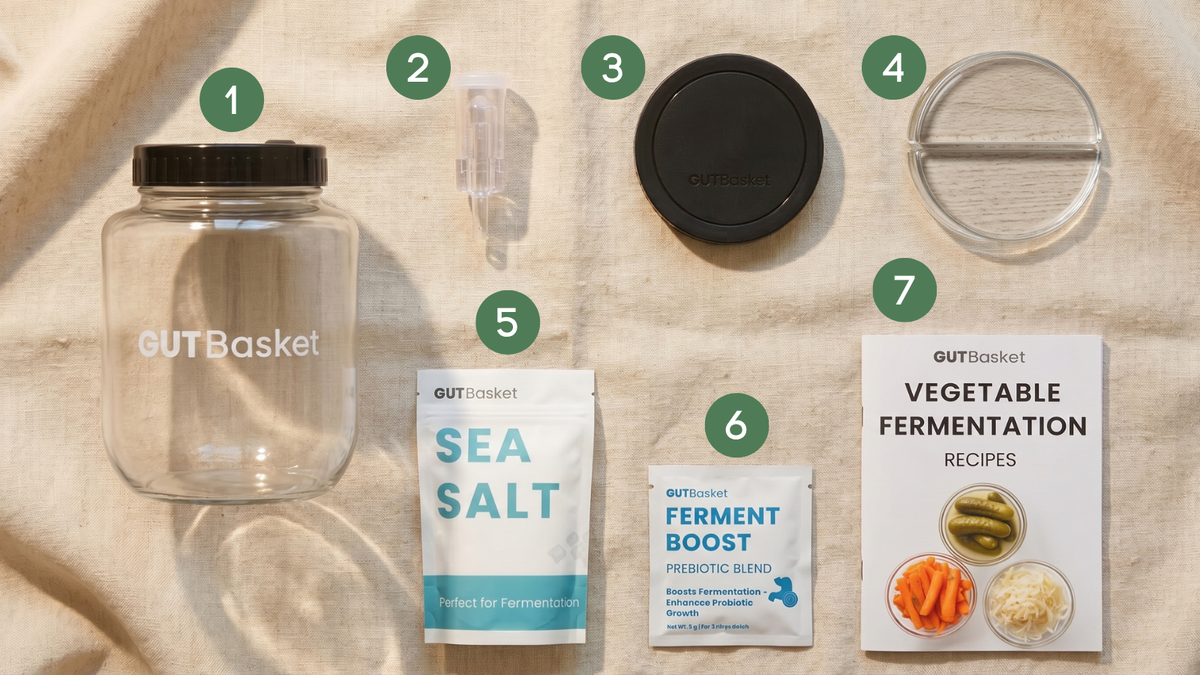
Glass Fermentation JarFood-grade, reusable, weighted base. 1L or 2L.
Airlock + Airlock LidReleases CO₂ during fermentation. Blocks oxygen — the cause of mould and kahm yeast.
Storage LidSolid stainless lid. Swap once fermentation hits desired sourness — fridge-stable up to 3 months.
Glass WeightKeeps vegetables submerged below the brine — the line between fermented and mouldy.
Sea Salt SachetPre-weighed for a 2–2.5% brine. The standard for safe, crunchy vegetable ferments.
Ferment BoostPrebiotic blend that feeds the wild LAB on vegetable surfaces from Day 1.
Recipe Booklet4 starter recipes: fermented onions, sauerkraut, fermented carrots, mixed vegetable ferment.
Just add fresh vegetables and water. The kit handles brine, weighting, gas, science.
SCIENCE-BACKED DESIGN
BUILT FOR
PERFECTFERMENTS.
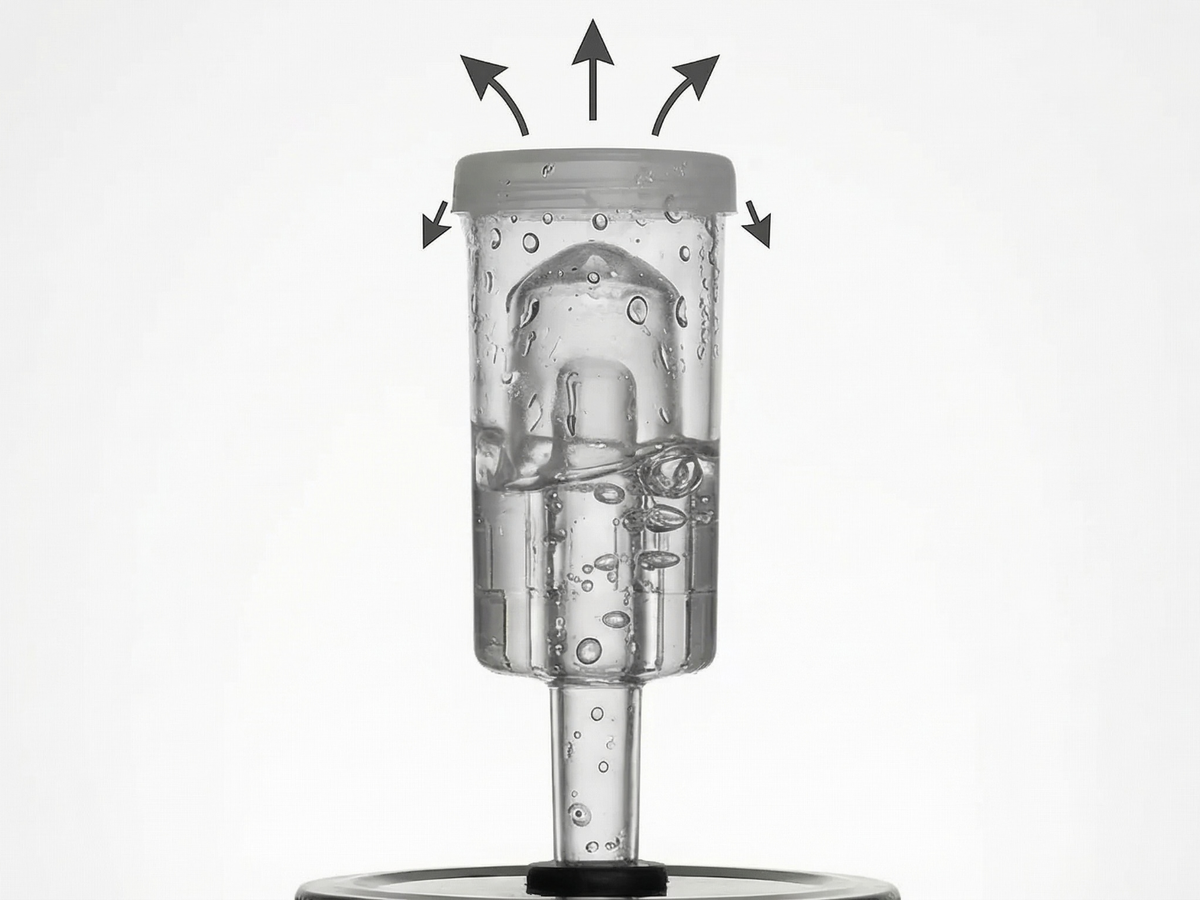
Airlock
WHAT IT DOES
Gas out. Oxygen blocked.
WHY IT MATTERS
Oxygen = mould. Airlock blocks it. No daily burping needed.
Anaerobic
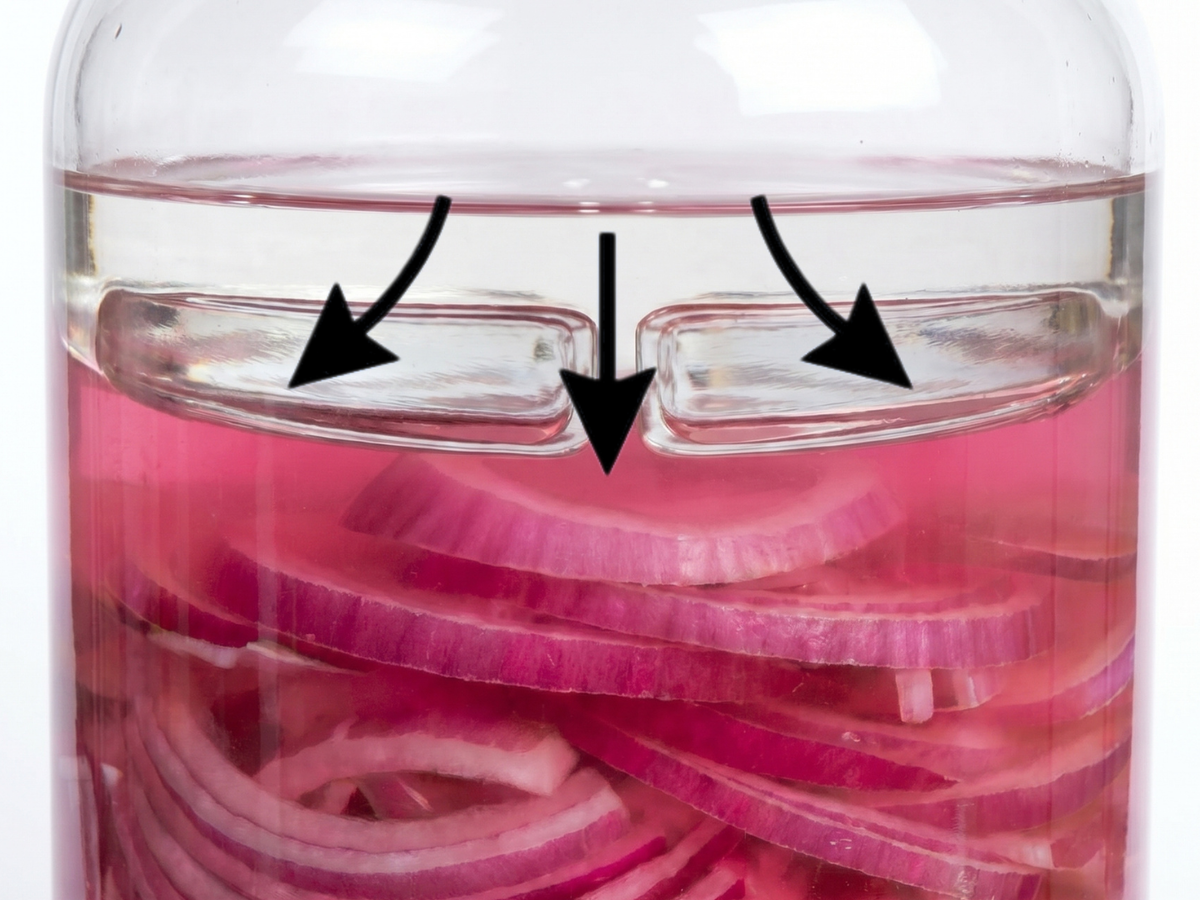
Glass weights
WHAT IT DOES
Pushes veggies under brine.
WHY IT MATTERS
Above brine = mould. Weight fixes it. Safe ferment. Every time.
Brine-safe
REAL RESULTS
Real Vegetable Fermenters.

Fermented onions have replaced achaar on my table. Just onions, salt and live cultures — and every dal-roti meal feels complete now.
Rekha
53, Pune
Fresh jar weekly
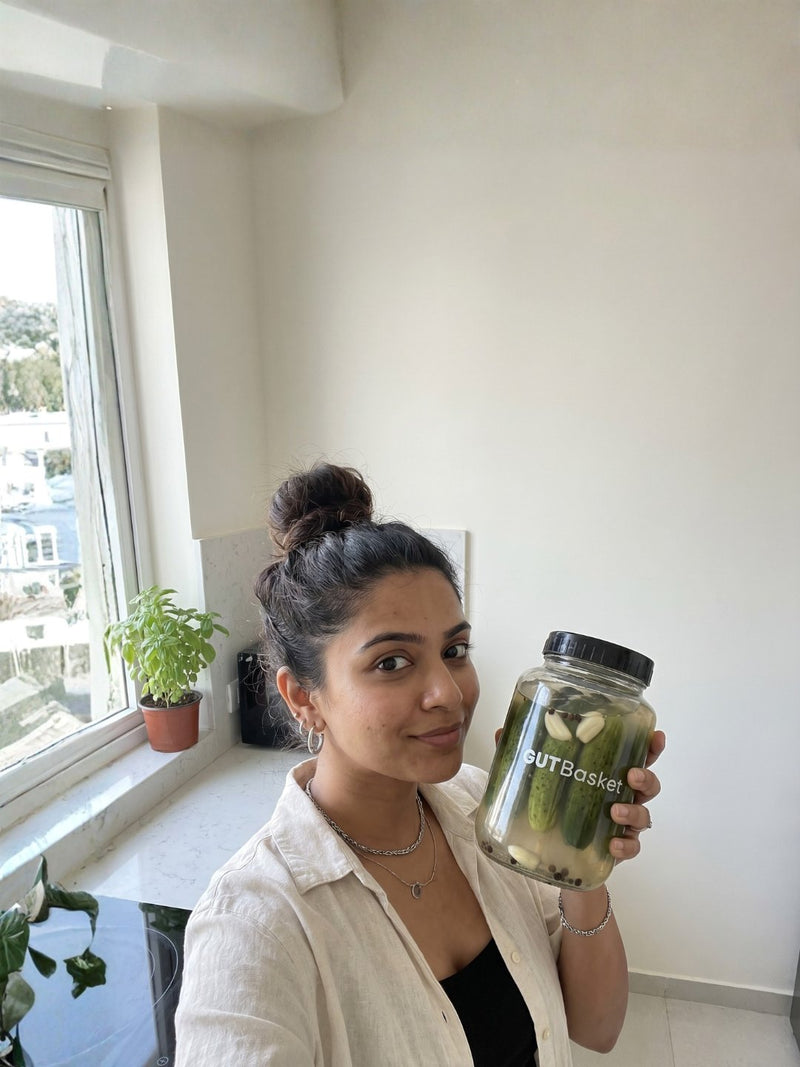
I didn't believe a jar could do this — my cucumbers come out crunchy and tangy every time. No vinegar, all live cultures.
Ananya
34, Bangalore
4 batches in

Fermented carrots are my favourite discovery — bright, crunchy and a little sour. They go with everything, from parathas to rice bowls.
Divya
43, Chennai
Verified buyer
WHAT TO EXPECT
YOUR GUT'S FIRST 30 DAYS.
Most people notice digestive shifts within the first week. Deeper benefits build over the first month.
WEEK 1
Meeting new fiber
Your gut bacteria meet a new food source. Mild gas may happen at first — normal, expected, short-lived.
WEEK 2
Settling in
Daily intake settles into a habit. Beneficial bacteria get more fermentable fiber to work with.
WEEKS 3–4
Steadier rhythm
Bowel habits often feel smoother and more predictable. Less post-meal heaviness for many users.
MONTH 2+
Compound effect
Compound benefits — steadier energy, better routine, fewer disruptions. The long game.
INSIDE THE KIT
SPICE MIX +
FERMENT BOOST.
Two pre-measured additions handle the two things home fermenters get wrong: salt ratio and Day-1 bacterial activity.

Sea Salt Sachet
Non-iodised. Pre-weighed for a 2–2.5% brine — the lacto-fermentation sweet spot. Too low risks pathogens; too high stalls the LAB. No measuring, no guesswork.

Ferment Boost
Inulin + acacia fiber. Feeds the wild lactic acid bacteria on every vegetable surface, helping fermentation start faster and finish with a higher probiotic count.
Finished your sachets? Keep the jar. Refill only what you need.
- Sea salt and Ferment Boost refills available separately
- Reuse your glass jar for every batch, every season
- Make onions, sauerkraut, carrots, beetroot and mixed veg in the same jar
- ₹199 for 5 batches — about ₹40 per litre of fermented vegetables
THE SCIENCE
WHY FERMENTED VEGETABLES
BELONG ON EVERY PLATE.
47%
Reported Better Mood
After adding fermented foods for just 14 days.
56%
Reported More Energy
Without supplements or lifestyle changes.
42%
Reported Less Bloating
From everyday fermented foods.
52%
Reported Less Hunger
Linked to improved gut health.
HOW TO
Add crunch, tang and probiotics to every meal.
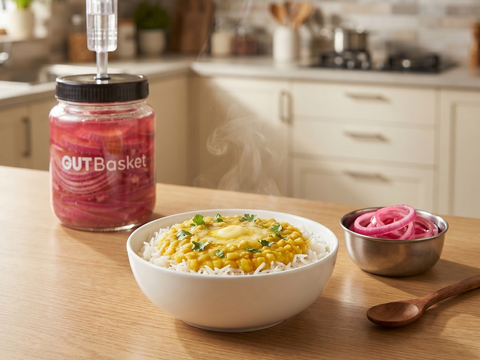
With Dal-Rice or Khichdi
A spoonful of fermented onions or mixed veg. Adds the tangy crunch comfort meals need.
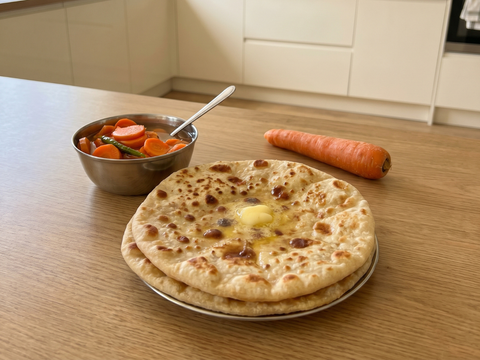
With Paratha and Thepla
Fermented carrot or cabbage instead of oil-pickle. Lighter, crunchier, alive.
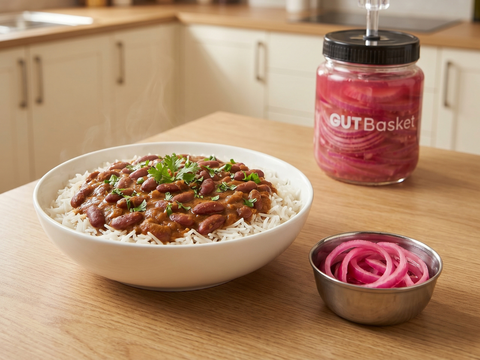
With Chole, Rajma, Biryani
Cuts through heavy meals with acidity, crunch and freshness — the way raw onion always tried to.
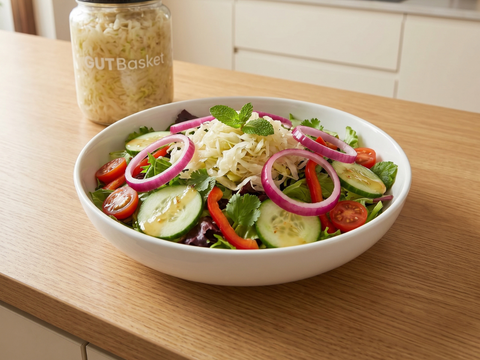
In Salads and Wraps
Sauerkraut in a sandwich, fermented onion on chaat. Probiotic dressing, no oil required.
ONE KIT. ENDLESS VARIETY.
4
ONE KIT. EVERY VEGETABLE. Beginner-friendly recipes inside.
QUESTIONS?
Real questions, real answers
How long does vegetable fermentation take?+
3 to 5 days at Indian room temperature (24–32°C). Warmer = faster. Taste from Day 3. When the tang is right, move it to the fridge.
Which vegetables work best?+
Cabbage (sauerkraut), onion, carrot, radish, beetroot, garlic, mixed veg. Cucumber and bell pepper work too. Avoid watery low-fibre veg like tomato — they go mushy.
Do I need to add vinegar?+
No. The kit is for real brine fermentation. Tang develops naturally from lactic acid bacteria — never from added vinegar.
Why do I need the glass weight?+
Vegetables above the brine touch oxygen, and oxygen invites mould. The weight keeps everything submerged where fermentation works and mould doesn't.
What does the airlock do?+
Releases CO₂ during fermentation. Blocks oxygen from coming in. The two jobs that decide whether you get fermented vegetables or a science experiment.
Will it taste like Indian oil-pickle?+
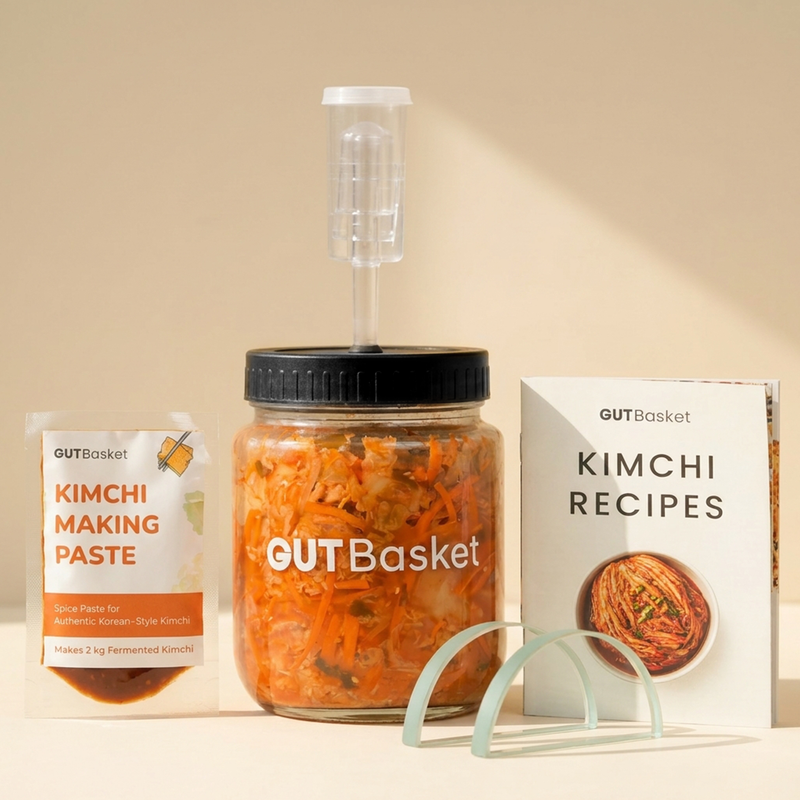
No. It will taste tangy, salty, crunchy — but cleaner, sharper, more vegetable-forward. Closer to sauerkraut and Korean kimchi than to mango pickle.
Why fermented onions specifically?+
Most Indian meals already include raw onion. Fermenting them keeps the bite, kills the harsh sulphur sharpness, and adds probiotics — without changing your habit.
How much should I eat daily?+
1 to 2 tablespoons with meals. If you're new to fermented foods, start with half a spoon and build up over a week.
Is cloudy brine normal?+
Yes. Cloudy brine usually means active fermentation. White film on the surface (kahm yeast) is harmless — scrape it off. Fuzzy mould or off smells = discard the batch.
How long can I store it after fermentation?+
Refrigerated, easily 4–6 weeks. Flavour deepens with time; texture softens slowly. Best in the first month.
Can I reuse the brine for the next batch?+
Yes — old brine is a live starter culture. Add a splash to a new batch and you'll see fermentation kick off in hours, not days.
Is mould dangerous?+
White film = kahm yeast, harmless, just scrape. Fuzzy green/black/pink = throw the batch out. The glass weight + airlock prevent both, but check on Day 2.
ALL REVIEWS
