Sauerkraut (Fermented Cabbage)
Sauerkraut is a timeless classic — a simple, probiotic-rich ferment made from cabbage and salt. Its crisp texture and tangy flavour make it a perfect side for hearty meals, sandwiches, or eaten straight from the jar. Fermenting cabbage not only enhances its taste but also boosts its nutritional value with beneficial bacteria.
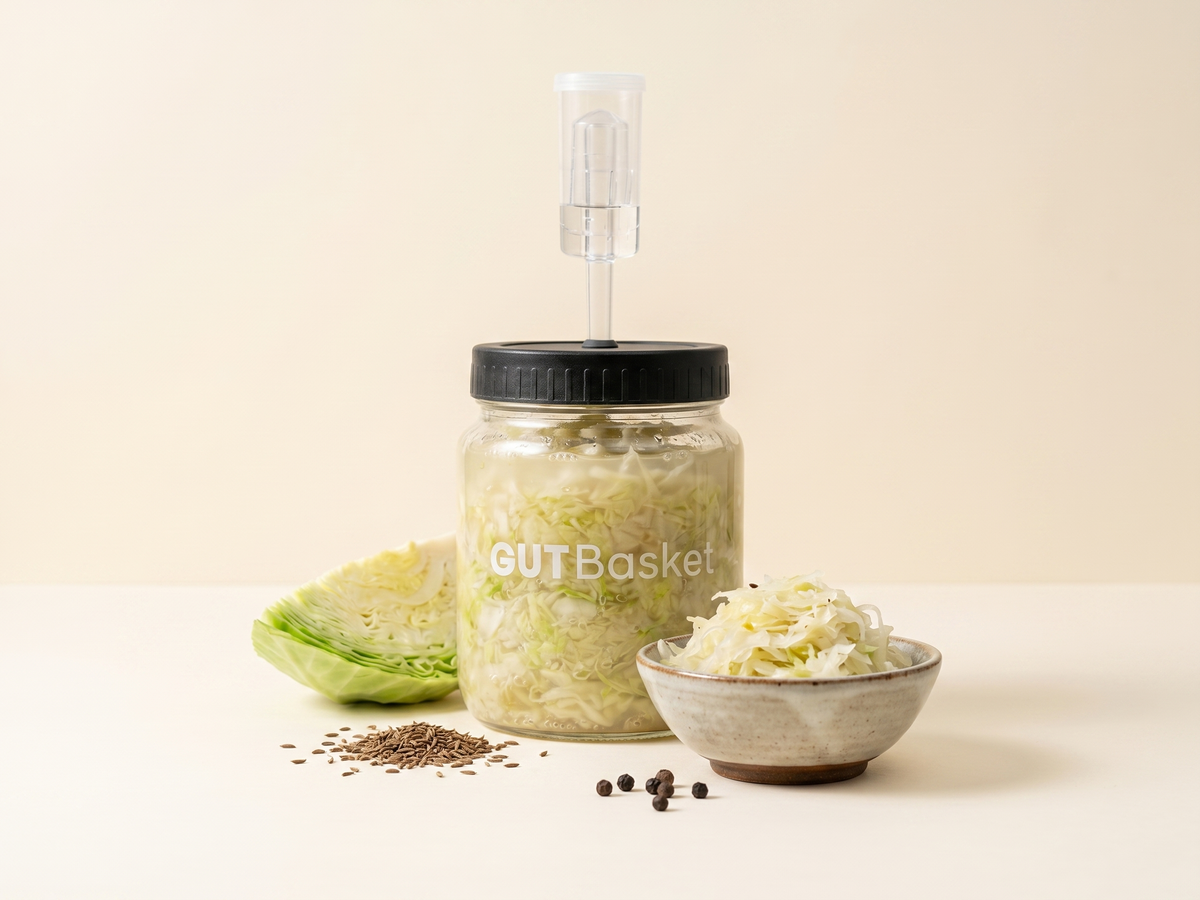
Ingredients
For a 1 L fermentation jar.
- 1 medium head of cabbage (about 800 g), thinly sliced (core discarded)
- 20 g sea salt (1 tbsp)
- 1 clean outer cabbage leaf (for covering)
- 1 tbsp fennel or caraway seeds (optional)
Equipment
- 1 L glass fermentation jar
- Glass weight
- Grommet lid and airlock
Method
Prepare the cabbage
Remove any damaged outer leaves, then thinly slice the cabbage and discard the core. In a large bowl, mix the sliced cabbage with the sea salt and let it rest for 30 minutes.
Massage the cabbage
Massage the cabbage for about 10 minutes until it softens and releases its natural juices. Mix in the fennel or caraway seeds, if using.
Pack the jar
Pack the cabbage tightly into your 1 L fermentation jar, pressing down to submerge it in its own brine. Place the reserved cabbage leaf on top to cover the surface, then a glass weight to keep everything submerged. If the brine doesn't fully cover, top up with a little saltwater (½ tsp salt in ½ cup filtered water). Leave at least 2 inches of headspace for the gases to expand.
Seal with an airlock
Close the jar with a grommet lid. Fill the airlock halfway with water so gases can escape while keeping contaminants out.
Ferment
Place the jar in a cool, shaded spot (around 20–25°C) and let it ferment for 4–7 days.
Check daily
Keep the cabbage submerged, pressing down if needed. Begin tasting from Day 4 — it should be tangy and pleasantly sour.
Store and enjoy
Once you like the flavour, remove the weight and airlock, replace with a storage lid, and refrigerate. Properly stored sauerkraut can last up to 1 year.
Watch the walkthrough

Notes & variations
- Cabbage type: green or white cabbage works best for a traditional kraut.
- Headspace: keep 2 inches clear for gases and expansion.
- Brine check: add extra saltwater if the cabbage isn't fully covered.
- Fermentation time: cooler climates may need longer than 7 days.
- Storage: sauerkraut improves with age — flavour deepens over time in the fridge.
Simple yet powerful, sauerkraut is one of the most forgiving and rewarding ferments you can make. Try adding carrots, beets, or apples for your own twist.